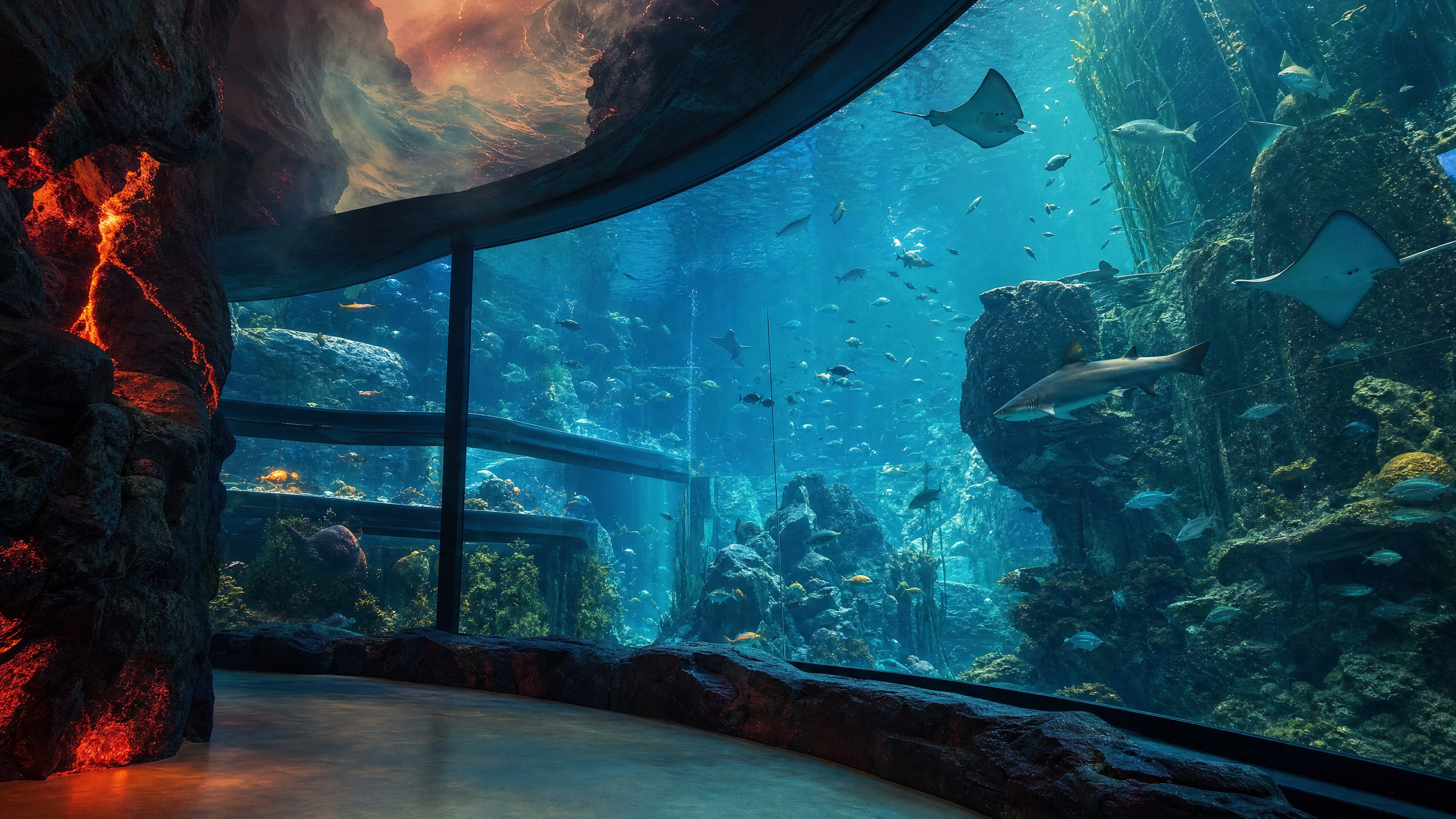
海遊館を理解する鍵は、展示を「環太平洋の旅」として見ることです。来館者は上層階から順路に入り、森や沿岸、寒帯、熱帯、外洋へと環境が変化する構成を下りながら進みます。この一方通行に近い動線は迷いにくく、混雑時でも「次にどの展示を見るか」を考えずに鑑賞へ集中しやすいのが特徴です。
施設のテーマは、火山活動や海流によって結びついた太平洋沿岸地域です。公式情報では、展示は複数の地域水槽と中心的な太平洋水槽から成り、約620種・約30,000点の生きものを飼育展示するとされています。数字だけを見ると大規模水族館ですが、実際の魅力は生物数よりも、地域ごとの水温、光、岩場、植生、泳層の違いが順路の体験に反映されている点にあります。
初めて訪れるなら、序盤は写真撮影を急がず、展示の変化を観察する時間に充てると理解が深まります。たとえば日本の森から海鳥、寒帯の水辺、熱帯の水域へ移ると、照明の色と音の密度が少しずつ変わります。これを意識すると、海遊館は「大水槽を見る場所」ではなく、太平洋を小さく圧縮した編集空間として楽しめます。
The best way to understand Kaiyukan is to read it as a journey around the Pacific Rim. Visitors enter from an upper level and gradually descend through changing environments, moving from forest and coastline to cold-water habitats, tropical zones and the open ocean.
Official materials describe a large aquarium with about 620 species and roughly 30,000 animals. Those numbers matter, but the stronger experience comes from the way temperature, lighting, rock forms and swimming depth change from one habitat to the next.
First-time visitors should avoid rushing straight to the famous central tank. Notice how the early galleries establish geography and atmosphere, and the later sections then bring the Pacific story into a larger open-water scale.
参考情報References
- Kaiyukan official visitor information
- Kaiyukan hours and admission guidance
- Kaiyukan exhibit concept and scale
- Google Ads destination requirements
- Travel Caffeine independent review
- Enjoy Osaka Kyoto Kobe guide
- Tripadvisor traveler review summary
本記事は独立編集による来館計画ガイドです。営業時間・料金・入館条件は変更される可能性があるため、必ず公式情報で確認してください。This article is independently edited. Hours, fees and entry rules may change, so always confirm official information.